Best Superset Alternative for Universities in 2026
The best software alternative for Superset is Leapath, a platform built specifically for universities to prepare their students for their careers in 2026.
Summary
- The best software alternative for Superset is Leapath, a platform built specifically for universities to prepare their students for their careers in 2026.
- The blog compares both platforms across student tools, employer tools, and career services team tools.
- Leapath has the better student tools, while Superset has the better career services team tools and employer tools.
- Leapath wins on student tools because it starts a step earlier. It identifies each student’s skill gaps for the career they want, then builds a plan to close them. Further, it sends their resume to the target job roles, posted by employers, that match their skills and strengths aptly.
- That plan helps all three groups. Students know exactly what to work on, career services teams know who needs help first, and employers get candidates whose skills are already verified. Book a free consultation call to see how Leapath can work for your students.
Introduction
If you’re comparing Superset and Leapath, start with one question. What is our recruitment problem, really?
For some colleges, the problem is the drive itself. Interviews are hard to schedule, resumes pile up, and employers want an easier way to run everything from shortlisting to offers. If that sounds like you, a platform built to run the recruitment cycle will help most.
For other colleges, the drive runs fine, but too many students still miss out. They don’t know which skills a job asks for. The career team can’t tell who needs help. Employers spend interview time just to find out who can do the job. That is a readiness problem, and it needs a different kind of platform.
Superset is built mainly for the first problem. Leapath is built for the second.
In this article, we go through both one group at a time: students, employers, and career services teams. By the end, you should know which one matches the problem you actually have.
Superset vs Leapath: what are the main differences?
We compare them on four things: student tools, employer tools, career services team tools, and track record. Each section ends with a short verdict.
1. Student tools
Here is how each platform supports a student, from preparing for jobs to getting hired.
Superset
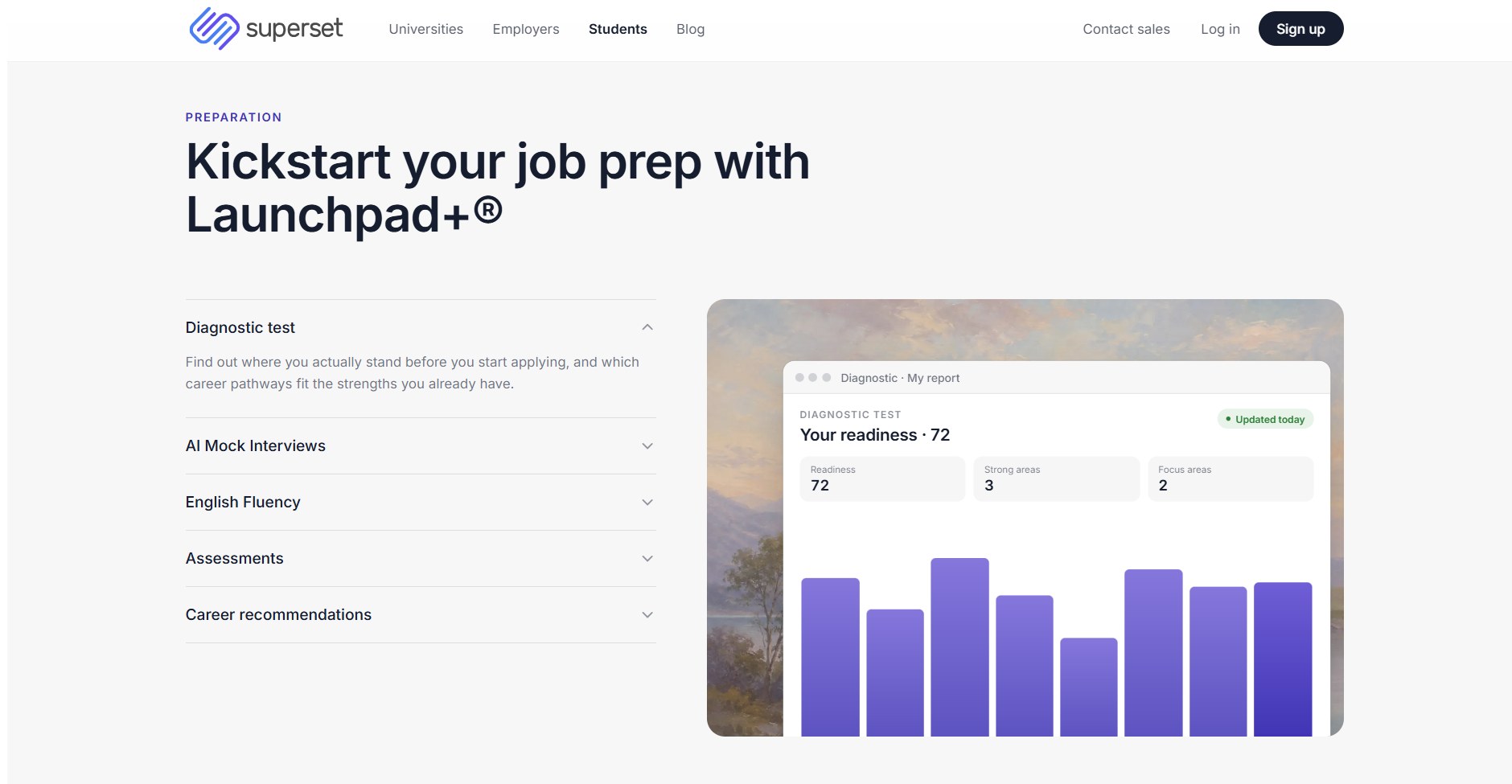
Superset gives students a set of tools to test their skills, prepare for interviews, and find employers. Here is what it offers.
- Diagnostic test: A starting test that shows students where they stand.
- Assessments: Students take assessments to check and build their skills.
- Career recommendations: Superset suggests careers that fit a student’s skills.
- AI mock interview: Students practise interviews with an AI interviewer before the real ones.
- Resume optimisation: Students can improve their resumes on the platform.
- Employer matching: Students are matched with employers who are hiring.
Leapath
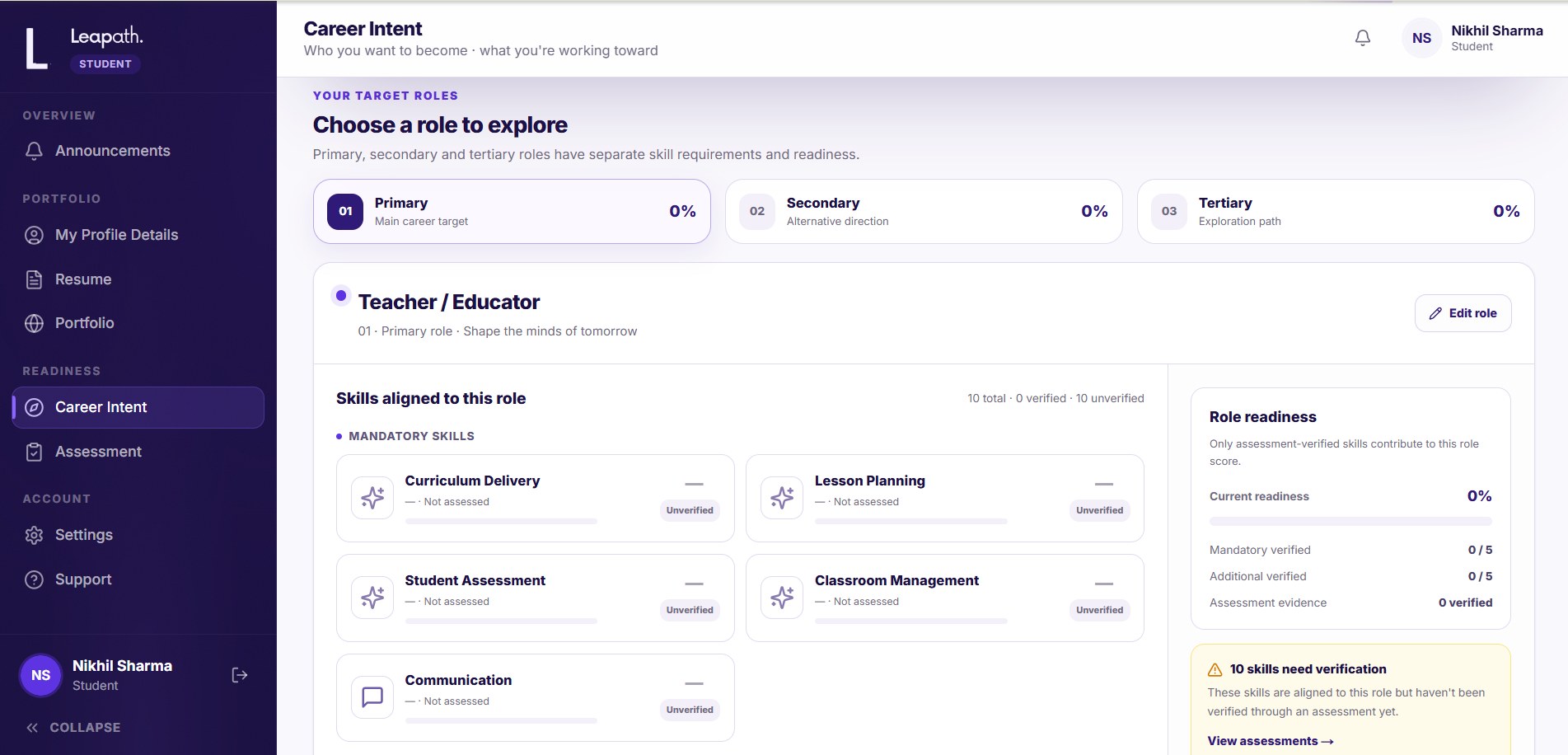
Leapath starts a step earlier, by measuring where a student stands today and building a structured plan to close the skill gaps keeping them from their dream jobs.
Here is how it does this.
- Readiness score: Students take assessments built for the job roles they are aiming for and get a live score out of 100. There are separate scores for technical ability, communication, and problem solving, so they know which area needs the most work.
- Skill gaps: Leapath shows the skills holding the student back and compares them with the exact skills employers want for the target role.
- Weekly roadmap: The skill gap is turned into structured weekly steps with a tracker, so the student always knows what to do next. This differs from tools that suggest courses or tests and leave the student to decide the order.
- Role fit scores: Students see match scores for a primary, a secondary, and a tertiary target role that they set themselves.
- Employer matches: As students improve, Leapath matches them with employers hiring for their target roles.
- Public profile: Students can share a profile showing their readiness scores and verified skills. They can see who has viewed it and which employers have shortlisted them.
Which has better student tools?
Leapath has the better student tools because it turns a result into a plan. Students get a readiness score for the role they want, a list of exact skill gaps, and a weekly roadmap with a tracker. Role fit scores and a verified profile then help them reach employers.
Superset offers a wide set of preparation tools, including a diagnostic test, assessments, skill-based career recommendations, AI mock interviews, and resume optimisation. Leapath does not offer mock interviews, so Superset is stronger for interview practice. Leapath’s advantage is that it ties scores, gaps, and next steps into one tracked weekly plan.
2. Employer tools and candidate discovery
Here is how each platform helps employers reach the right candidates.
Superset
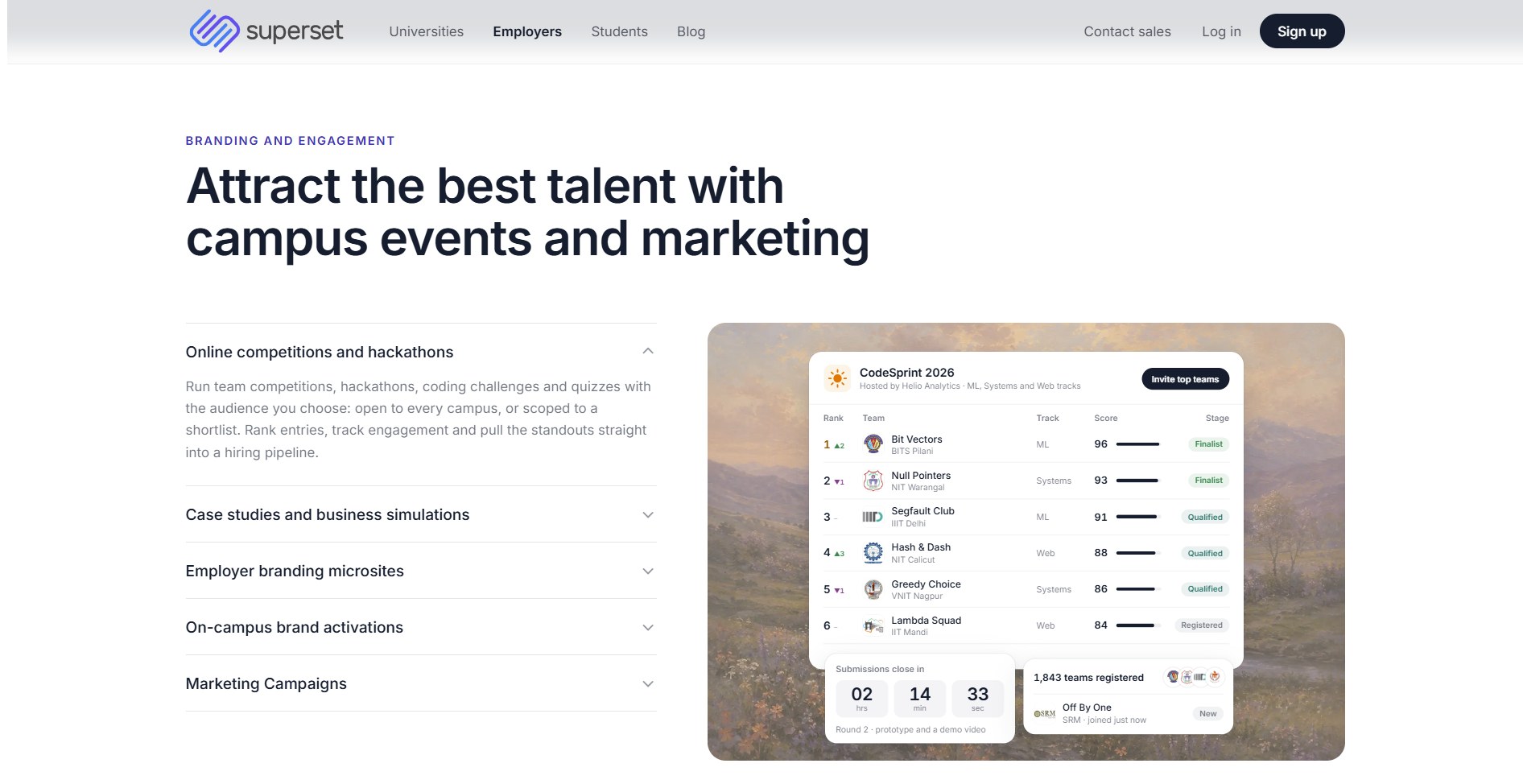
This is where Superset is strongest. It covers hiring from the first test to the signed offer. Here is what it offers.
- Assessments: Employers can test candidates on the platform.
- Work simulations: Candidates complete job-style tasks, so employers can see how they work.
- AI interviews: AI can run early interview rounds, which saves recruiter time.
- AI resume shortlisting: AI sorts resumes and shortlists the best fits.
- Virtual interview drives: Employers can manage online interview drives from one place.
- Automated outreach: Employers can reach out to candidates without sending every message by hand.
- Offers and onboarding: Employers can manage offers and onboarding in the same system.
- Dashboards and analytics: Employers can track how a hiring drive is going.
Leapath
Leapath focuses on filtering before employers get involved, so they only see candidates who are already pre-vetted. Here is how it does this.
- Skill verification: Students are assessed on their skills. Anything they add to their profile, such as resume details or certificates, goes through a verification queue before it reaches an employer.
- Pre-vetted candidates: Employers only see candidates who have passed a readiness level and are free of false claims.
- Employer matching: Leapath matches students with employers hiring for their target roles. The aim is faster and more reliable hiring than sorting through a large pool of unverified applications.
Which has the better employer tools?
Superset wins on the tools themselves. Assessments, work simulations, AI interviews, resume shortlisting, interview drive management, and onboarding make it a complete recruiting setup.
Leapath takes a different route. Its pool is smaller, but every candidate has been assessed and verified, so employers need to screen less. That is a fair advantage, but it is less proven than Superset’s full toolkit.
3. Career services team tools
Here is how each platform helps career services teams run their work and support students.
Superset
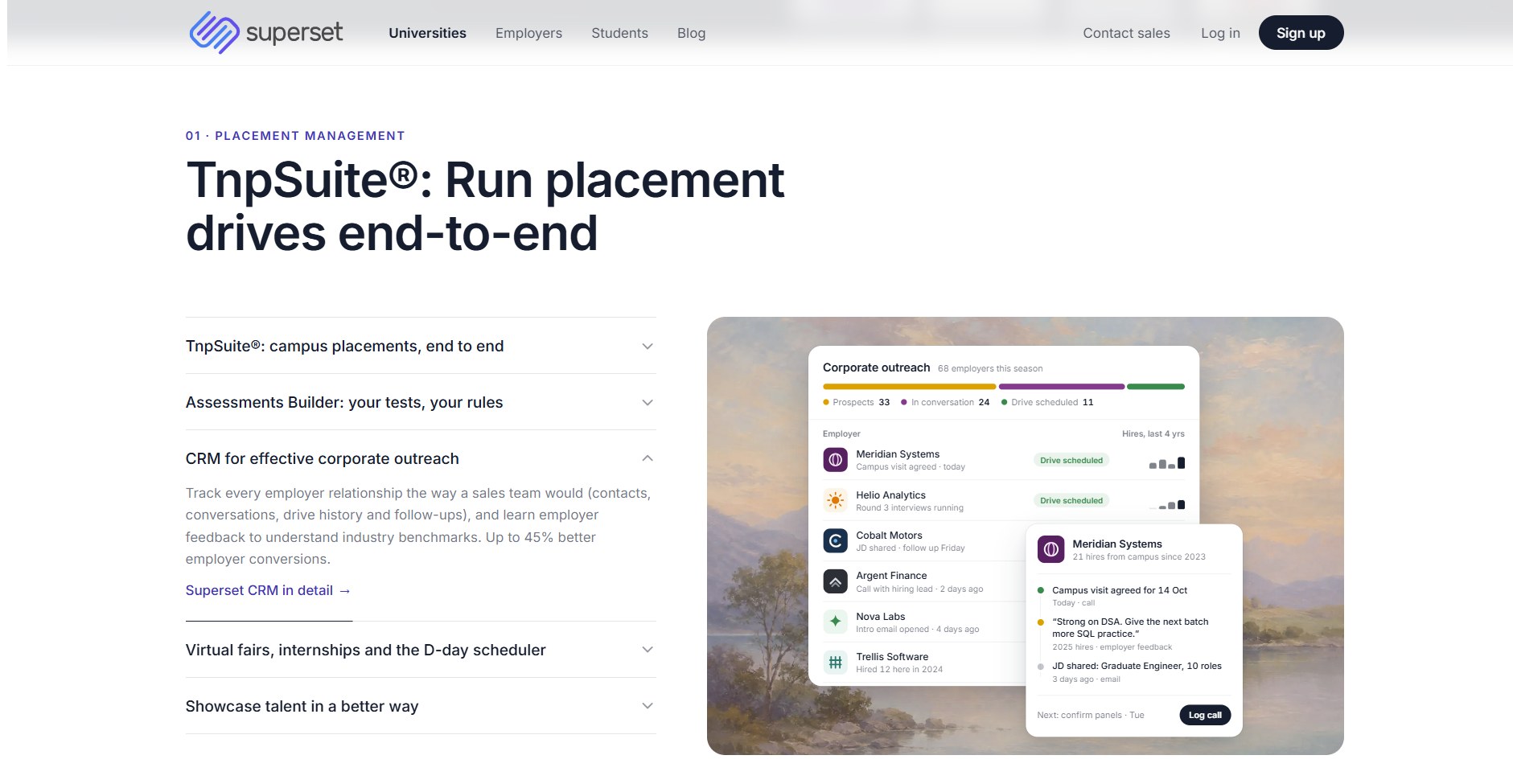
Superset is built to run the whole recruitment cycle for universities. Here is what it offers the team.
- Hiring pipeline tracking: Staff can follow students through each stage of a hiring drive.
- Job and employer relations: Staff manage employer contacts and the jobs that companies post.
- Assessment builder: Teams can create their own tests for students and for screening.
- Internal screening and mock interview rounds: Staff can screen students inside the college and run practice rounds before the real drive.
- Career fairs and interview scheduling: Staff can run fairs and book interviews on the platform.
- Custom resume templates: Resumes are generated from verified student records, so details stay consistent and accurate.
- Student mentors: Students can be linked with mentors.
- Career resources and counselling: Staff can offer guidance materials and counselling in one place.
- Analytics, dashboards, and reports: Teams can track student data and report results.
- Competitions, hackathons, and coding contests: Staff can run events that help students build and show skills.
Leapath
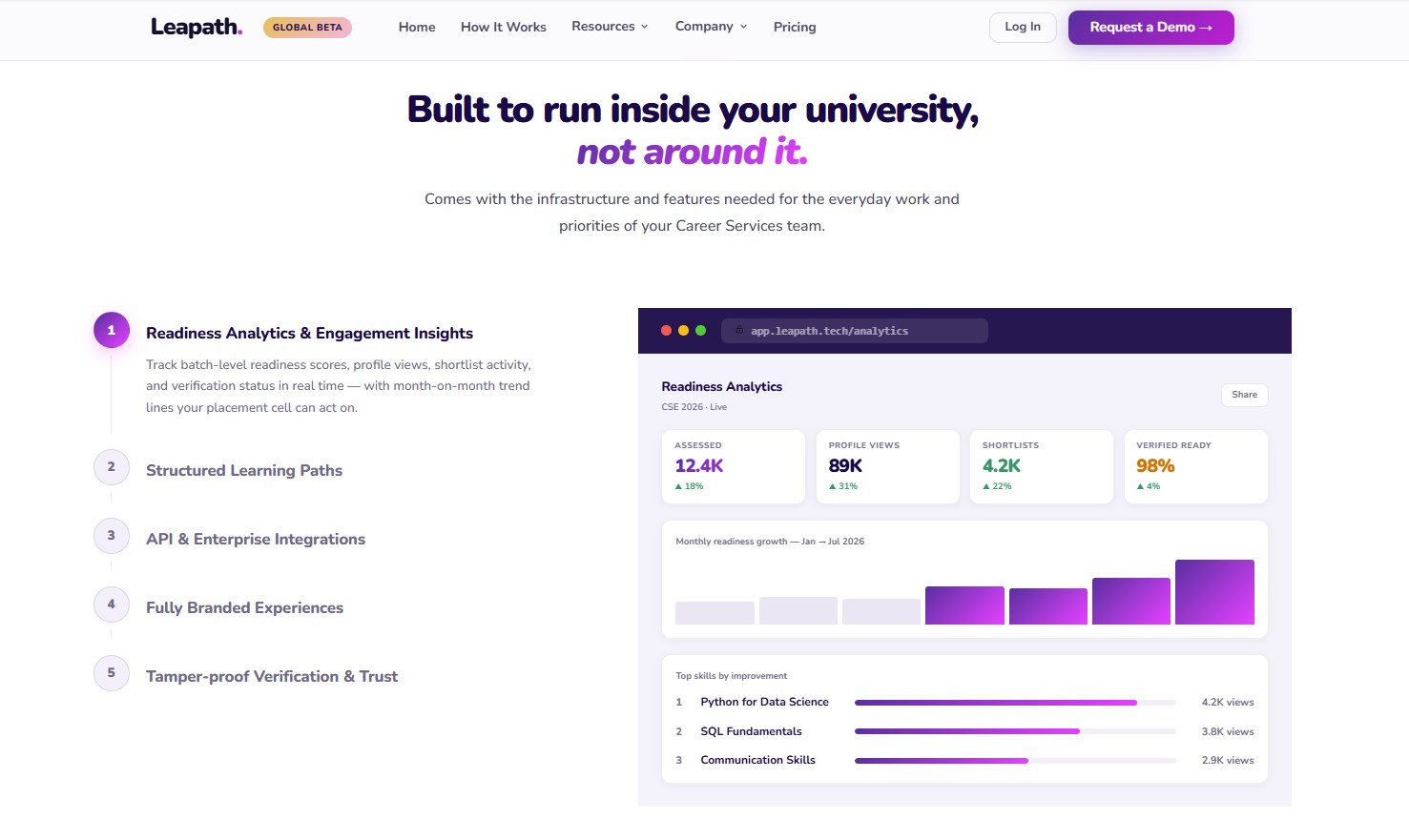
Leapath helps career services teams see how ready their students are and act on it. Here is how it does this.
- Student profiles and scores: The team can see where each student stands individually.
- Cohort trends: Average scores and performance trends are shown for the whole cohort, so the team can see whether students are improving.
- Skill gaps: Gaps are shown for the whole institute and for each department, so the team knows which skills to train and where.
- At risk panel: Students are grouped into low, medium, and high risk, so the team knows who needs help first.
- Institute vs national average: This view shows how the college compares with others.
- Verification queue: The team checks what students claim before employers see it. When a student adds a resume detail or a certificate, it goes into the queue for review.
- Reports: The team can generate monthly updates for deans or principals.
- Hiring pipeline: The team tracks each student’s stage from applied to interviewed to hired, per student or across the whole cohort.
Which has the better career services tools?
Leapath has the better career services tools when the question is who is ready. Superset’s analytics makes the recruitment process easier. Leapath’s focuses more on individual student’s job readiness. That helps the team decide where to spend its time.
Both platforms track the hiring pipeline and offer reports. Superset is still stronger for running the recruit cycle itself, with fairs, interview scheduling, screening rounds, mentors, and student events.
4. Support, reviews and track record
A platform’s track record tells you how much evidence you have to check its claims.
Superset
Superset calls itself the official recruitmet portal for more than 600 colleges in India. Large universities use it season after season. SRM says it has used Superset for six recruitment seasons in a row. Reviews on Capterra praise its ease of use and its support team. Some reviewers say they would like more flexible customisation and clearer reporting.
Leapath
Leapath has far fewer reviews. This does not say anything negative about the product itself, but it does mean there is less outside proof to check its claims against.
Which has the better track record?
Superset wins. It has more reviews, more colleges using it, and more institutions you can ask for references. With Leapath, your own trial or demo matters more than outside validation.
Conclusion
Choose Superset if your biggest need is running recruitments from start to finish. It gives students interview practice and resume help, gives employers a full hiring toolkit, and gives colleges tools for fairs, screening, and student events.
Choose Leapath if your biggest need is knowing whether students are ready. It measures real skills against real roles, shows each student what they are missing, and gives employers a smaller group of candidates who have already been verified.
Both platforms aim to help students get hired. The better one for you depends on whether your main problem is managing job drives or making sure students are ready for them.