Best Symplicity Alternative for University Career Services Teams
The best software alternative for Symplicity is Leapath, a platform built specifically for university career services teams.
Summary
- The best software alternative for Symplicity is Leapath, a platform built specifically for university career services teams.
- This blog compares both platforms across student tools, employer tools, career services team tools, and track record.
- Leapath comes out ahead on student tools and career services team tools, since it starts by finding skill gaps and turning them into a plan, while Symplicity wins on employer reach and its longer track record.
- Leapath creates a personalised, step-by-step plan that gets every student ready for the job market, and all three groups benefit. Students see exactly what to focus on, career services teams see who needs support first, and employers receive candidates whose skills have already been checked. To see how this could work for your students, book a free consultation call.
Introduction
A career platform has to work for three groups at once: students, career services teams, and employers. Each group needs something different.
- Students need to know what stands between them and the job they want, ideally before they apply. Most find out only after a rejection.
- Career services teams need to know which students need help first, so they can use limited resources well. With only resumes to go on, it is hard to tell who is ready and who needs more training.
- Employers need candidates who can do the job. Entry-level roles bring large numbers of applications, and there is no quick way to check skills before spending time on interviews.
Career platforms tend to answer these needs in one of two ways.
The first way is to widen access and manage activity. Students get a place to find jobs and book appointments. Teams get tools to run fairs, track events, and handle employer contacts. Employers get a large pool of candidates to search. This approach helps more people connect, and it keeps the office organised.
The second way starts a step earlier. It first finds out what is holding each student back from their dream career, then builds a plan to close that gap. Students get a readiness score, a clear list of missing skills, and a weekly plan. Teams see which students are at risk and which skills to train. Employers see candidates who have already been checked. This starts at the student and helps people connect with the right match.
Symplicity leans toward the first way. Leapath is built around the second.
This article compares the two on student tools, employer tools, career services team tools, and track record. Each section ends with a short verdict, so you can see which platform fits the problem your institution has today.
Symplicity vs Leapath: what are the main differences?
Both platforms help students get hired and help colleges and employers work with early-career talent.
We compare them on four things: student tools, employer tools, career services team tools, and track record. Each section ends with a short verdict.
1. Student tools
Here is how each platform supports a student, from searching for jobs to getting hired.
Symplicity
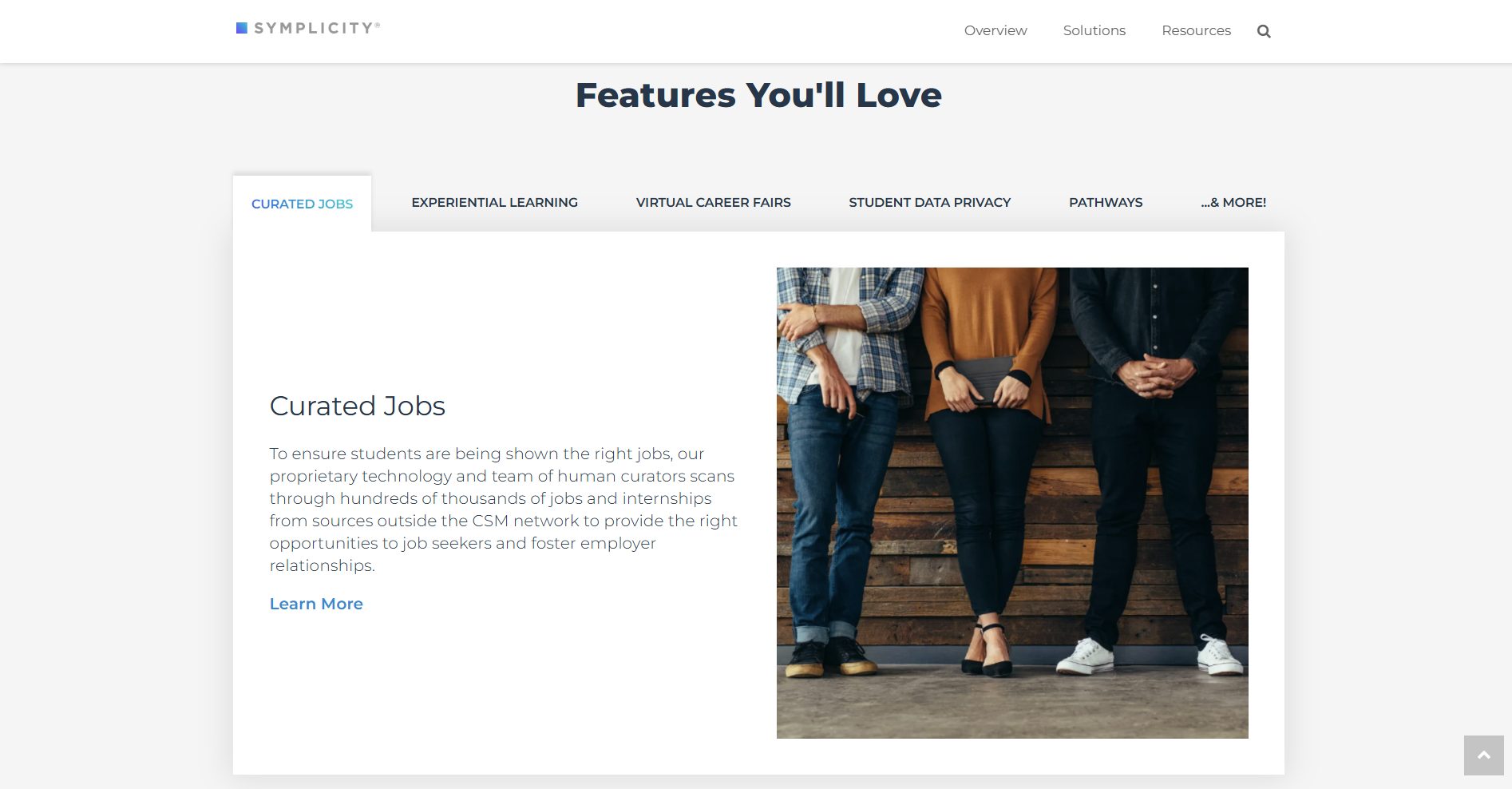
For students, Symplicity works mainly as a job board with management tools around it. It helps students find openings, apply, and keep track of appointments, events, and programs. Here is what students get.
- Job search: Students can search jobs and internships, save them, apply, and set job alerts. A split view lets them read job details and move between listings without losing their place.
- Curated jobs: Symplicity’s technology and a team of human curators scan hundreds of thousands of jobs and internships, so students see more relevant openings.
- Application materials: Students can store resumes and cover letters, build a portfolio, and opt in to have their profile seen by employers.
- Appointments, events and mock interviews: Students can book advising appointments, RSVP to events and on-campus interviews, and practise with virtual mock interviews.
- Pathways: Career advisors can set up structured steps for building skills. Staff can tailor these to a student’s major, interests, and activity.
- Experiential learning (Outcome): Symplicity’s Outcome product catalogs internships and other hands-on opportunities. It guides students through each step of the process, so they can find a placement, complete it, and have it recorded.
- Mobile app: Students can reach career services from a phone, with push notifications.
- Skills Development (CareerHub): In its international product, students can link campus activities and extra-curricular work to their job goals.
Leapath
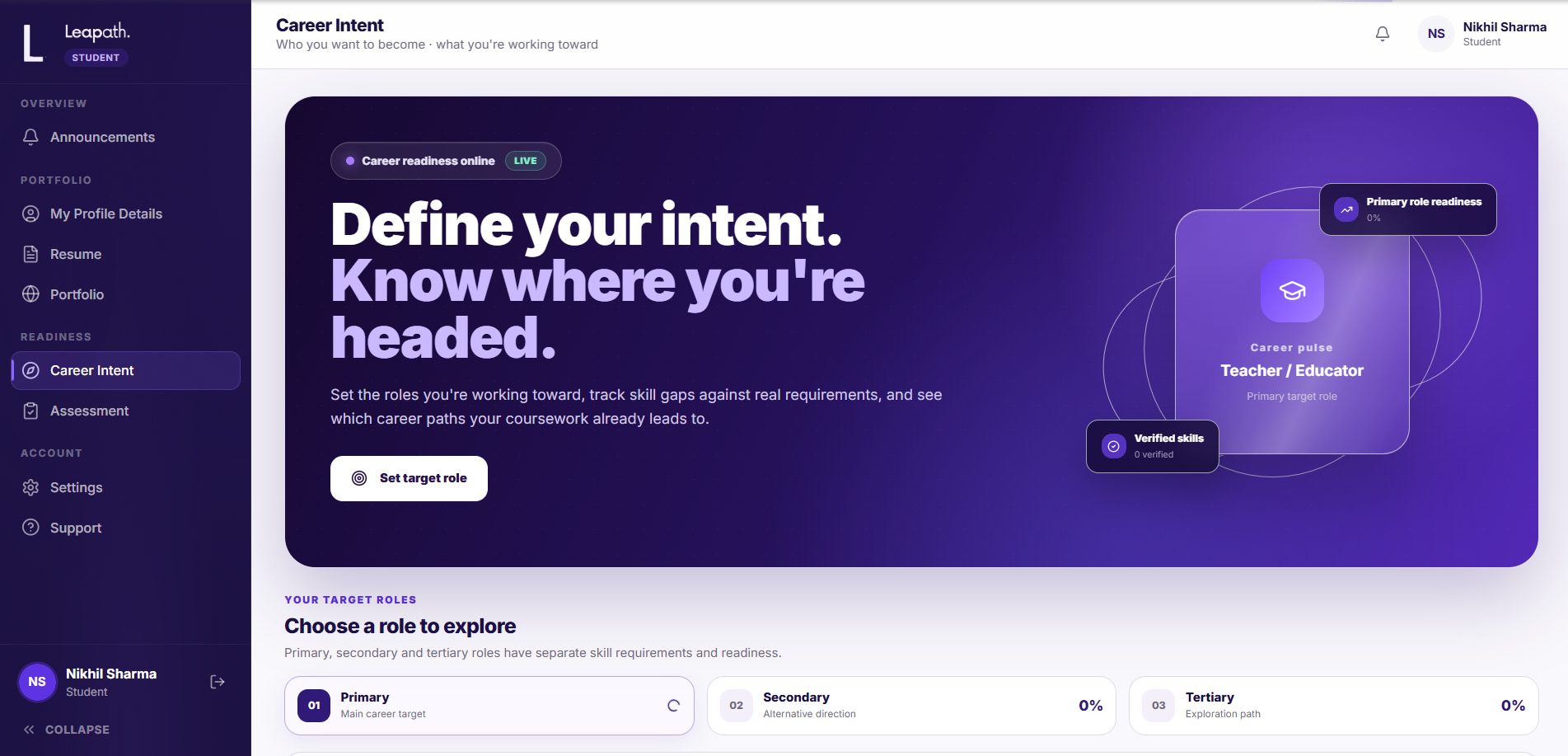
Leapth provides Curated job search and Application materials rather it starts a step earlier. It measures where a student stands today and builds a structured plan to close the skill gaps between them and their dream job.
- Skill gaps: Leapath shows the skills holding the student back and compares them with the exact skills employers want for the target role.
- Job Readiness score: Students take assessments built for the job roles they want and get a live score out of 100. There are separate scores for technical ability, communication, and problem solving, so they know which area needs the most work.
- Weekly roadmap: The skill gap is turned into structured weekly steps with a tracker, so the student always knows what to do next.
- Role fit scores: Students see match scores for a primary, a secondary, and a tertiary target role they have set themselves.
- Employer matches: As students improve, Leapath matches them with employers hiring for their target roles.
- Public profile: Students can share a profile with readiness scores and verified skills. They can see who viewed it and which employers shortlisted them.
Which has better student tools?
Leapath has the better student tools because it works on the cause of rejections, not just the search. Students get a readiness score for the role they want, a clear list of missing skills, and a weekly plan to close them, without waiting for an advisor.
Symplicity does a good job of putting jobs, events, appointments, hands-on learning, and advisor-built pathways in one place. Pathways are set up by staff, so the plan depends on how much time advisors have. With Leapath, every student gets a score, a clear list of gaps, and a weekly plan without waiting for an advisor.
2. Employer tools
Here is how each platform helps employers reach the right candidates.
Symplicity
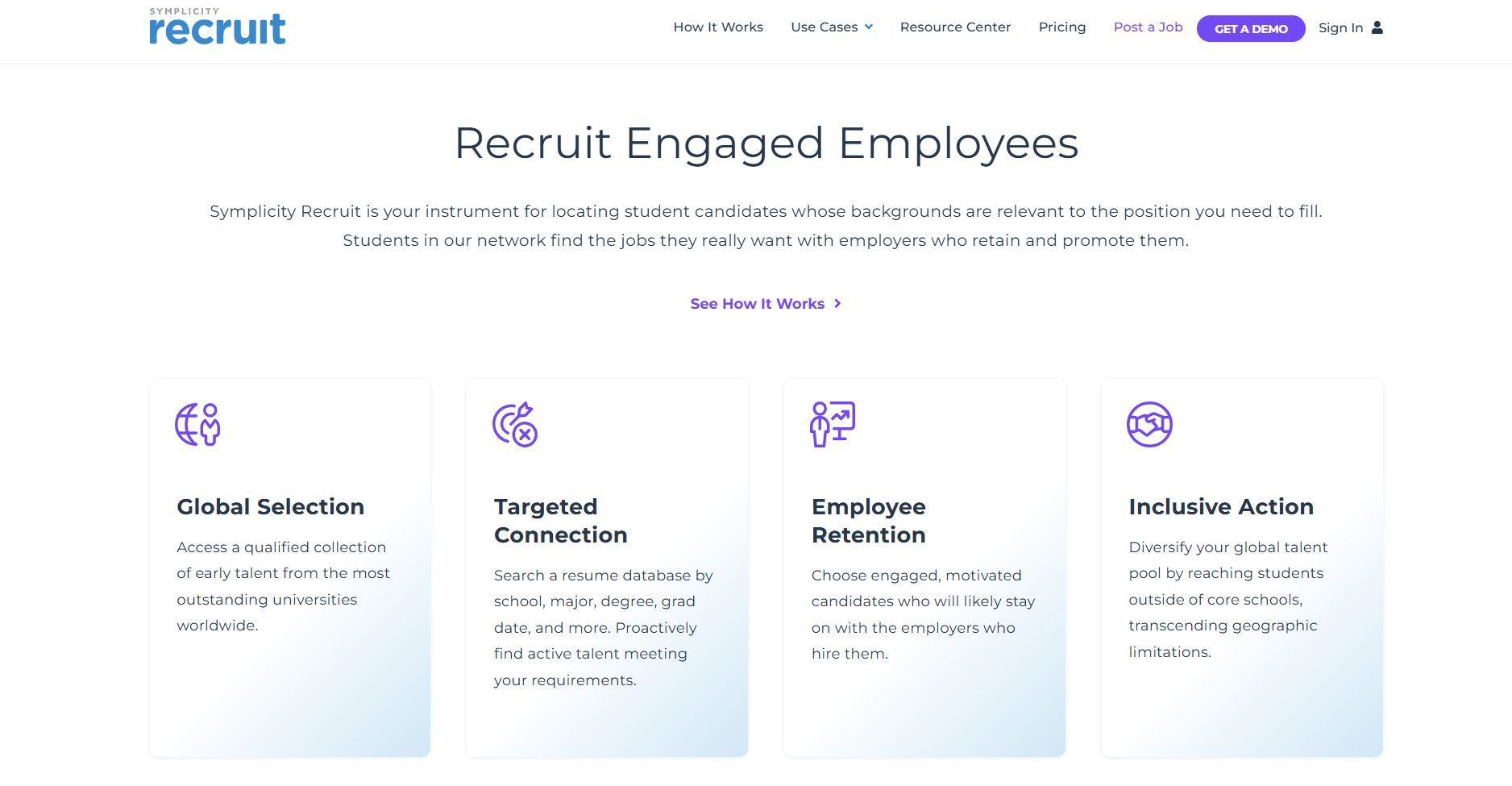
This is where Symplicity is strongest. Its employer platform, Recruit, links employers to a network of more than 500 universities. It is organised into five areas.
- Finding Candidates: Employers put up job postings in the network. After a job is posted, Symplicity’s AI scans the resume database and lists the best matches. Recruiters can then invite those students to apply.
- Analytics: Metrics job views, apply clicks, total applicants, application completion rate, and time to first applicant help the employers. A recruitment funnel tracks candidates from pending to invited to screen to invited to interview. Reports such as the Top Connected Schools leaderboard and the Talent Engagement dashboard are also available
- Events and Career fairs: There are options for small and midsize businesses and for large enterprises. Virtual career fairs let employers meet students in other regions.
Leapath
Leapath focuses on filtering before employers get involved, so they only see candidates who are already pre-vetted.
- Skill verification: Students are assessed on their skills. Anything they add to their profile, such as resume details or certificates, goes through a verification queue before an employer sees it.
- Pre-vetted candidates: Employers only see candidates who have passed a readiness level and are free of false claims.
- Employer matching: Leapath matches students with employers hiring for their target roles. The aim is faster and more reliable hiring than sorting through a large pool of unverified applications.
Which has the better employer tools?
Both platforms offer AI candidate search and analytics, so the core tools are similar. But Symplicity wins on reach. Its resume database holds a network of more than 500 universities.
Although Leapath adds verification layer which is missing from Symplicity. Every candidate has passed a readiness level and has verified skills, and details like resume entries and certificates are checked before an employer sees it. Employers can trust what they read and spend less time on interviews just to confirm it. The pool is smaller, but each candidate comes with proof.
3. Career services team tools
Here is how each platform helps career services teams run their work and support students.
Symplicity
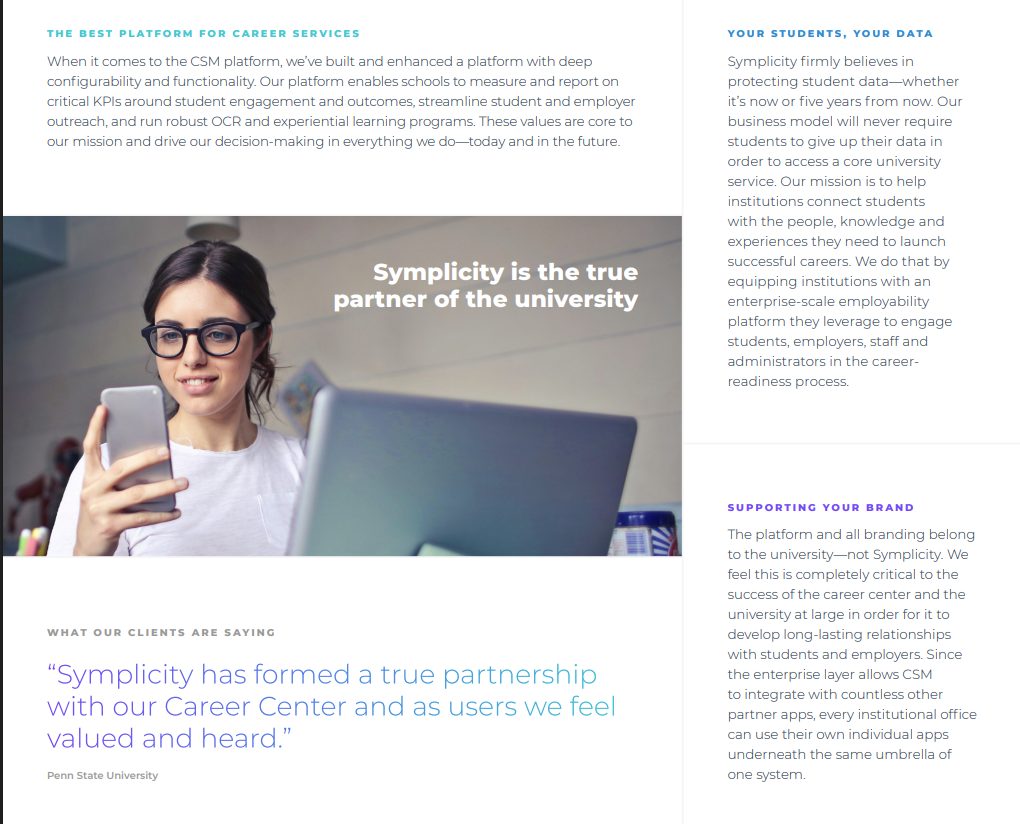
Symplicity is built to run the whole career office. Here is what it offers the team.
- Student CRM: Staff can see a student’s history and past interactions in one place.
- Appointment scheduling: Students book time with advisors, and staff manage the calendar.
- Events and career fairs: Staff can run in-person and virtual fairs, track attendance, and see real-time engagement data. Swipe card kiosks help with check-in.
- Jobs and employer relations (Symplicity CareerHub): Staff manage job postings, on-campus interviews, alumni mentors, and employer contacts.
- Metrics and reports: Advanced outcomes reporting and custom dashboards help teams show results to school leaders.
- Integrations: Symplicity offers APIs to connect its platform with other campus systems.
Leapath
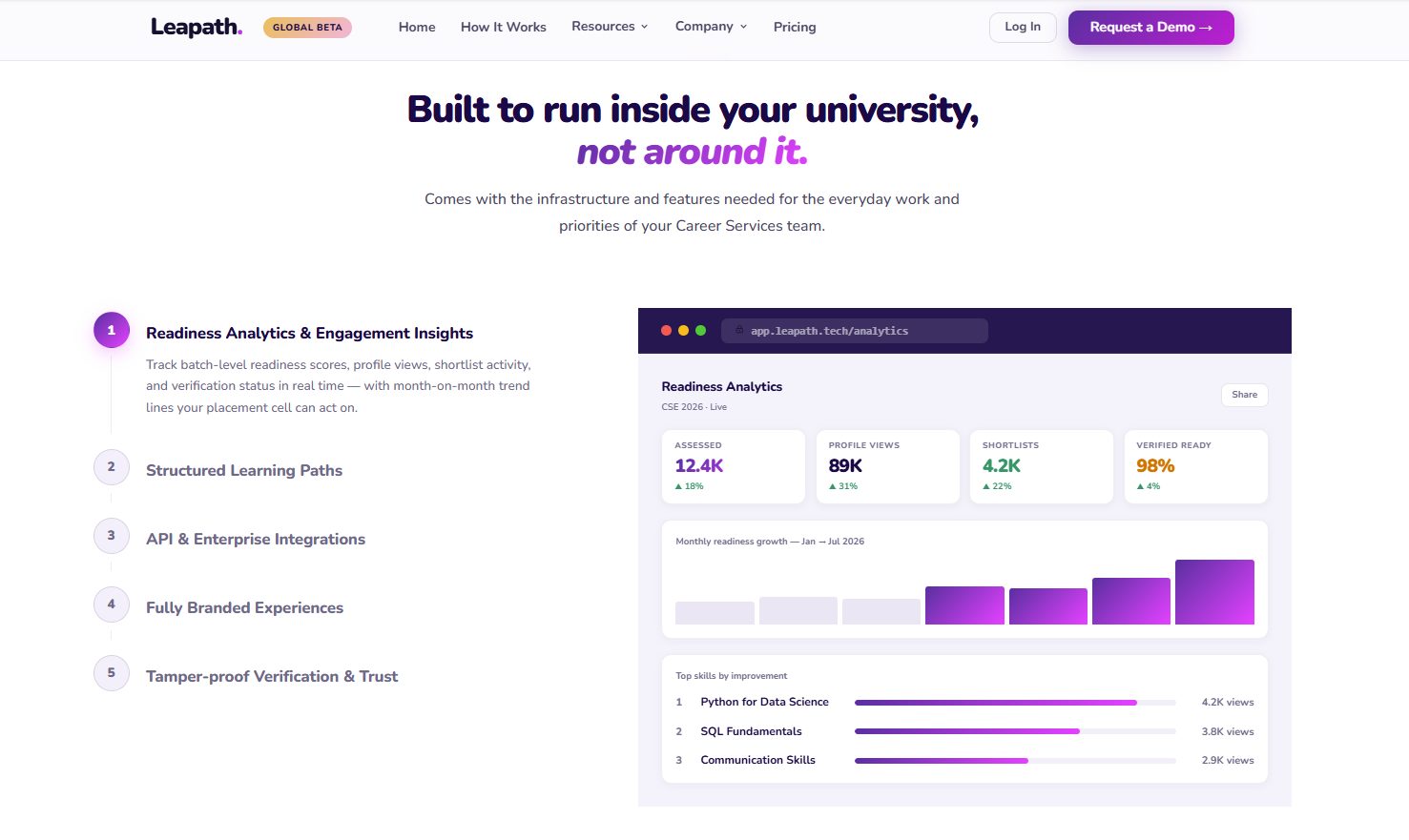
Leapath helps career services teams see how ready their students are and act on it.
- Student profiles and scores: The team can see where each student stands.
- Cohort trends: Average scores and trends show whether students are improving.
- Skill gaps: Gaps are shown for the whole institute and for each department, so the team knows which skills to train and where.
- At risk panel: Students are grouped into low, medium, and high risk, so the team knows who needs help first.
- Institute vs national average: This view shows how the college compares with others.
- Verification queue: The team checks what students claim about their skills before employers see it.
- Hiring pipeline: The team tracks each student from applied to interviewed to hired, per student or across the cohort.
Which has the better career services tools?
It depends on which job you need done.
Symplicity is stronger at running the office. If your team needs one system for appointments, fairs, employer contacts, and experiential learning, Symplicity covers more ground.
Leapath is stronger at showing where students stand. Symplicity can tell you how many students came to an event or booked an appointment. Its public pages do not describe a view of which students lack which skills. Leapath shows who is at risk, where the gaps are, and how the college compares nationally, so the team can decide where to spend its time.
4. Support, reviews and track record
A platform’s track record tells you how much evidence you have to check its claims.
Symplicity
Symplicity has been serving universities for many years. It has a long customer list across several countries, a web-based help center, client managers, and published pages on security, privacy, and accessibility. Its wider suite also covers experiential learning, student engagement, and student conduct, which suits schools that want one vendor across campus.
Leapath
Leapath has far fewer reviews. This does not say anything negative about the product itself, but it does mean there is less outside proof to check its claims against.
Which has the better track record?
Symplicity wins. It has a longer history, more institutions you can ask for references, and more reviews to check. With Leapath, your own trial or demo matters more than outside validation.
Conclusion
The right choice between Symplicity & Leapath depends on what is going wrong today for each of your three groups.
- For students: If they struggle to find openings and book support, Symplicity covers that well. If they reach employers but get rejected without knowing why, Leapath shows them the gap and gives them a plan.
- For your career services team: If the problem is running fairs, appointments, and employer contacts, Symplicity is the stronger system. If the problem is not knowing which students are ready or who needs help first, Leapath is built for that.
- For employers: If they need a large pool and a full set of recruiting tools, Symplicity is ahead. If they need a smaller group of candidates who are already verified, Leapath fits better.
Symplicity brings scale, which means a bigger employer network and more universities you can ask for references. Leapath is newer, so a trial or demo will tell you more than outside reviews can.
Both platforms aim to help students get hired. Choose Symplicity if your main need is managing career services and reaching employers. Choose Leapath if your main need is making sure students are ready for the opportunities in front of them.